
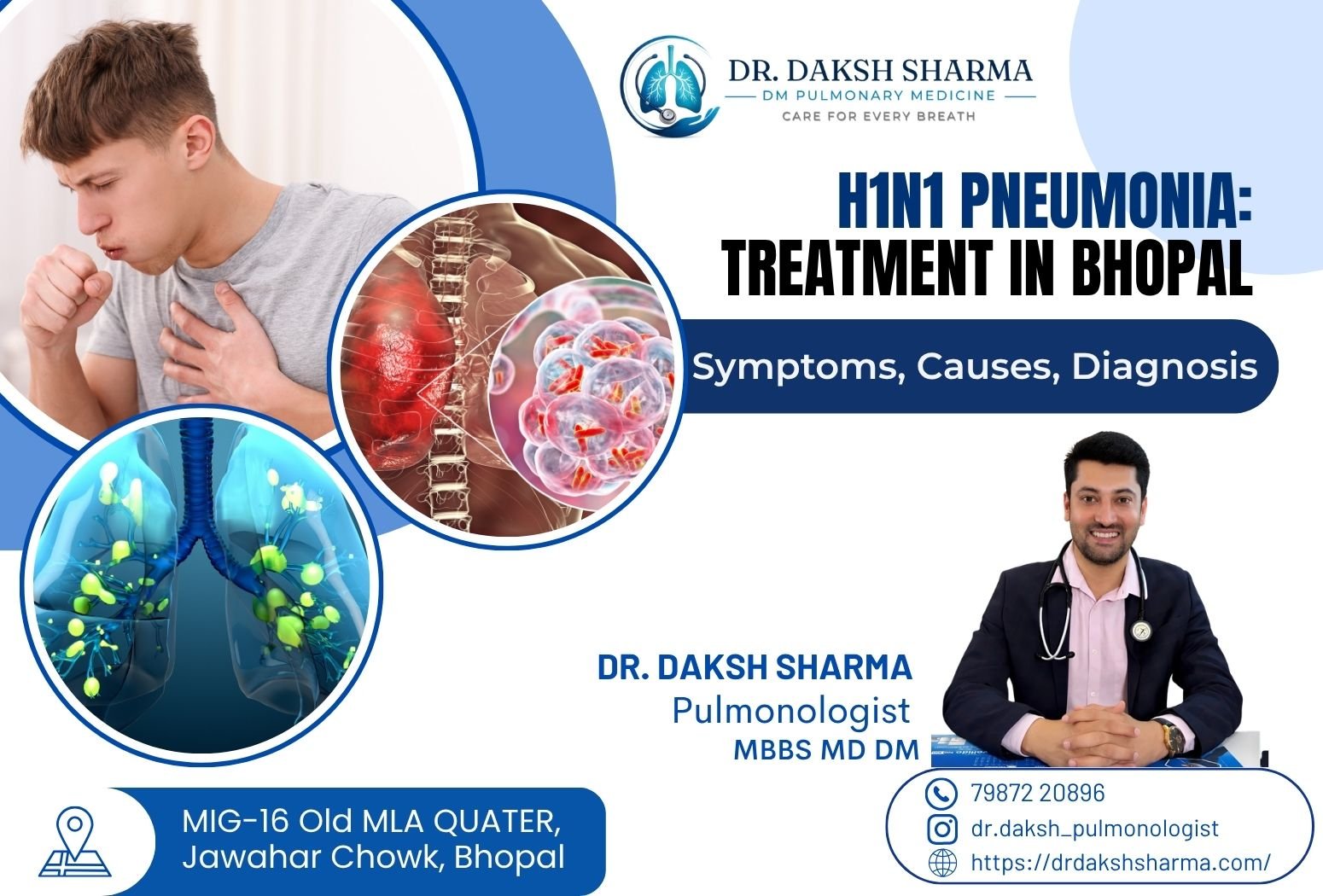
H1N1 Pneumonia Treatment in Bhopal requires timely medical evaluation because influenza-associated pneumonia can range from a respiratory illness to a serious condition affecting breathing and oxygen levels.
H1N1 Pneumonia Symptoms may initially resemble common influenza, including fever, cough, sore throat, body aches, headache, fatigue, and chills. When the infection progresses to pneumonia, symptoms such as shortness of breath, chest pain, rapid breathing, low oxygen levels, or worsening cough may occur.
Dr. Daksh Sharma is a Pulmonologist in Bhopal with specialized training in Pulmonary Medicine, Critical Care, Sleep Medicine, and Interventional Pulmonology. He holds MBBS, MD in Pulmonary Medicine, and DM in Pulmonary Medicine & Critical Care, along with FCSS certification.
With experience in managing complex respiratory and critical-care conditions, Dr. Daksh Sharma provides comprehensive care for asthma, COPD, tuberculosis, ILD, sleep disorders, and other lung conditions. His expertise also includes procedures such as bronchoscopy, EBUS, lung biopsy, pleural procedures, and airway interventions.
What Is H1N1 Pneumonia?
H1N1 pneumonia is a lung infection associated with influenza A(H1N1) virus infection. Pneumonia occurs when infection causes inflammation in the lungs and can interfere with normal oxygen exchange.
Influenza can cause pneumonia directly through viral infection. In some cases, a person with influenza may also develop a secondary bacterial pneumonia.
H1N1 Pneumonia Treatment in Bhopal depends on the severity of infection, oxygen levels, age, existing health conditions, and whether complications such as bacterial pneumonia are present.
What Causes H1N1 Pneumonia?
H1N1 pneumonia develops when influenza A(H1N1) infection affects the lower respiratory tract.
The infection may occur through respiratory spread when an infected person coughs or sneezes. Influenza viruses can spread easily between people, particularly in close-contact settings.
Direct Viral Infection
H1N1 influenza can directly infect the respiratory system and, in severe cases, cause viral pneumonia.
Secondary Bacterial Infection
Influenza can sometimes be followed by bacterial pneumonia. This is one reason worsening symptoms after an initial influenza illness should not be ignored.
Underlying Health Conditions
People with chronic lung disease, heart disease, diabetes, weakened immunity, or other medical conditions may have a higher risk of severe influenza complications.
H1N1 Pneumonia Symptoms
H1N1 Pneumonia Symptoms can vary depending on the severity of infection.
Common influenza symptoms may include:
- Fever
- Cough
- Sore throat
- Headache
- Body aches
- Chills
- Fatigue
- Runny or blocked nose
- Weakness
- Nausea or vomiting
- Diarrhea, particularly in some children
Influenza symptoms commonly begin within a few days after exposure and may initially resemble other viral respiratory infections.
As pneumonia develops, H1N1 Pneumonia Symptoms may become more respiratory in nature.
These can include:
- Shortness of breath
- Difficulty breathing
- Rapid breathing
- Chest pain
- Persistent or worsening cough
- Low oxygen saturation
- Severe weakness
- Confusion in severe illness
- Bluish discoloration related to low oxygen in serious cases
Shortness of breath, chest pain, hypoxia, and rapidly worsening respiratory symptoms require prompt medical attention.
Who Is at Higher Risk of Severe H1N1 Pneumonia?
Some people have a greater risk of developing severe influenza complications.
Higher-risk groups can include:
- Older adults
- Young children
- Pregnant women
- People with asthma
- People with COPD
- People with heart disease
- People with diabetes
- People with weakened immune systems
- People with other chronic medical conditions
H1N1 Pneumonia Symptoms should be evaluated promptly in high-risk individuals, particularly when breathing difficulties or worsening respiratory symptoms are present.
How Is H1N1 Pneumonia Diagnosed?
H1N1 Pneumonia Diagnosis in Bhopal begins with a detailed medical evaluation. The doctor may ask about the onset and progression of symptoms, exposure to influenza, existing medical conditions, and any previous respiratory problems.
The evaluation may include:
Clinical Examination
The doctor checks breathing pattern, heart rate, temperature, oxygen saturation, and other clinical signs.
Pulse Oximetry
A pulse oximeter can help assess blood oxygen levels. Low oxygen may indicate more serious respiratory involvement.
Influenza Testing
Respiratory samples can be tested for influenza. Molecular tests such as RT-PCR can provide laboratory confirmation, while some rapid tests may have lower sensitivity.
Chest Imaging
If pneumonia is suspected, chest imaging may help identify lung involvement and assess its severity.
Blood Tests
Depending on the patient’s condition, blood tests may be recommended to assess inflammation, infection, organ function, or other complications.
Why Is Early Diagnosis Important?
Early evaluation can help identify whether a person has uncomplicated influenza or a more serious lower respiratory infection.
H1N1 Pneumonia Diagnosis in Bhopal is particularly important when symptoms progress from fever and cough to breathing difficulty, chest pain, low oxygen, or severe weakness.
Influenza-related pneumonia can progress rapidly in some patients, and severe or progressive disease requires prompt medical management.
H1N1 Pneumonia Treatment
H1N1 Pneumonia Treatment in Bhopal depends on whether the illness is mild, severe, progressive, or associated with complications.
Treatment may involve:
- Antiviral medication when indicated
- Oxygen support when oxygen levels are low
- Fluids and supportive care
- Fever and symptom management
- Treatment of secondary bacterial infection when clinically suspected
- Hospital care for severe pneumonia
- Critical-care support in life-threatening cases
Antiviral treatment provides the greatest benefit when started early, particularly in people at increased risk of severe influenza or those with progressive disease. For influenza-associated pneumonia, CDC guidance recommends antiviral treatment such as oseltamivir as soon as possible when clinically indicated.
Role of Antiviral Treatment
Antiviral medicines work against influenza viruses and are different from antibiotics.
H1N1 Pneumonia Treatment in Bhopal may include antiviral therapy when influenza is suspected or confirmed, particularly in patients with severe, progressive, or high-risk illness.
Treatment decisions should be made by a doctor according to the patient’s symptoms, risk factors, timing, and clinical condition. Antibiotics do not treat influenza viruses themselves, but may be needed when a bacterial infection is also suspected.
When Is Hospitalization Needed?
Not every person with influenza requires hospitalization. However, severe pneumonia may require hospital-based monitoring and treatment.
Hospital care may be considered when there is:
- Significant difficulty breathing
- Low oxygen saturation
- Severe pneumonia
- Rapid clinical deterioration
- Dehydration
- Confusion
- Severe weakness
- Complications involving other organs
- Serious underlying medical conditions
H1N1 Pneumonia Treatment in Bhopal may require respiratory support or intensive care when pneumonia causes severe oxygen impairment or other life-threatening complications.
What Is the Difference Between H1N1 Flu and H1N1 Pneumonia?
H1N1 influenza can initially cause symptoms such as fever, cough, sore throat, body aches, headache, and fatigue.
Pneumonia occurs when infection involves the lungs and causes more significant lower respiratory tract disease.
H1N1 Pneumonia Symptoms are therefore more likely to include shortness of breath, rapid breathing, chest pain, low oxygen, and worsening respiratory distress.
Recognizing this difference is important because pneumonia may require more intensive medical management than uncomplicated influenza.
Can H1N1 Pneumonia Become Serious?
Yes. Influenza can lead to severe pneumonia, sepsis, respiratory failure, and worsening of underlying chronic diseases in some patients.
Severe H1N1 Pneumonia Symptoms such as difficulty breathing, chest pain, confusion, severe weakness, or signs of low oxygen should be treated as warning signs requiring urgent medical assessment.
What Should You Do If You Have H1N1 Symptoms?
If you develop influenza-like symptoms, especially during periods of increased influenza circulation, consider medical advice if symptoms are severe, worsening, or you belong to a high-risk group.
You should:
- Get adequate rest
- Drink sufficient fluids
- Monitor your symptoms
- Avoid close contact with others while ill
- Cover your mouth and nose while coughing or sneezing
- Maintain hand hygiene
- Seek medical attention if breathing problems develop
WHO recommends staying home when unwell and using appropriate hygiene measures to reduce the spread of influenza.
How Can H1N1 Pneumonia Be Prevented?
Influenza vaccination is an important measure for reducing the risk of influenza and its complications. WHO recommends annual influenza vaccination, particularly for people at higher risk.
Other preventive measures include:
- Regular handwashing
- Covering coughs and sneezes
- Avoiding close contact when sick
- Staying home when experiencing significant influenza symptoms
- Maintaining good respiratory hygiene
- Following recommended vaccination guidance
When Should You See a Pulmonologist?
A pulmonologist can be particularly helpful when influenza symptoms involve the lower respiratory tract or when a person has an existing lung condition.
You should consider medical evaluation if you experience:
- Persistent cough
- Difficulty breathing
- Chest discomfort
- Low oxygen saturation
- Worsening fever
- Wheezing
- Severe weakness
- Symptoms that are getting worse instead of improving
H1N1 Pneumonia Diagnosis in Bhopal can help identify lung involvement and determine whether further respiratory evaluation is required.
Why Choose Dr. Daksh Sharma for Respiratory Care in Bhopal?
Dr. Daksh Sharma is a Pulmonologist in Bhopal with specialized training in Pulmonary Medicine, Critical Care, Sleep Medicine, and Interventional Pulmonology.
His educational and professional training includes:
- MBBS – Peoples College of Medical Sciences & Research Centre, Bhopal, 2008–2013
- MD in Pulmonary Medicine – Peoples College of Medical Sciences & Research Centre, Bhopal, 2015–2018
- DM in Pulmonary Medicine & Critical Care – Amala Institute of Medical Sciences, Thrissur, 2021–2024
- Advanced Pulmonary & Critical Care Training
- FCSS certification
His clinical expertise includes respiratory and critical-care conditions such as asthma, COPD, tuberculosis, ILD, sleep disorders, and complex lung diseases.
He also has specialized experience with procedures including bronchoscopy, EBUS, lung biopsy, pleural procedures, and airway interventions.
Care Built Around You
Dr. Daksh Sharma’s approach to respiratory care focuses on:
Patient-Centred Care
Every consultation begins with understanding symptoms, medical history, concerns, and individual needs.
Clinical Excellence
Advanced training and specialized experience in pulmonary medicine, critical care, sleep medicine, and interventional pulmonology support comprehensive respiratory evaluation.
Compassionate Approach
Clear communication and personalized guidance can help patients better understand their respiratory condition and treatment options.
Advanced & Ethical Care
Modern diagnostic and treatment approaches are guided by clinical expertise, safety, and responsible medical practice.
Education & Advanced Medical Training
Dr. Daksh Sharma’s medical training reflects specialized education in pulmonary and critical care medicine.
His journey includes MBBS, MD in Pulmonary Medicine, DM in Pulmonary Medicine & Critical Care, and additional advanced training in interventional pulmonology, bronchoscopy, EBUS, sleep medicine, critical care, and respiratory procedures.
This specialized background can be valuable when managing complicated respiratory infections and patients who require detailed pulmonary assessment.
When Should You Seek H1N1 Pneumonia Treatment?
You should seek medical evaluation if you develop influenza symptoms along with:
- Shortness of breath
- Difficulty breathing
- Chest pain
- Persistent or worsening cough
- Low oxygen levels
- Severe weakness
- Confusion
- Worsening underlying lung disease
- Persistent or worsening fever
Prompt assessment is especially important for pregnant women, young children, older adults, and people with chronic medical conditions because these groups have a greater risk of severe influenza complications.
Summary
H1N1 Pneumonia Treatment in Bhopal should be based on the severity of influenza infection, respiratory symptoms, oxygen levels, underlying medical conditions, and the presence of complications.
H1N1 Pneumonia Symptoms can begin like ordinary influenza but may progress to shortness of breath, chest pain, low oxygen, and other signs of serious lung involvement.
Early medical assessment is important when symptoms become severe or progressive. Antiviral treatment may be recommended for patients with severe or progressive influenza, while bacterial infections may require appropriate antibiotic treatment.
FAQs – H1N1 Pneumonia
What are the symptoms of H1N1 pneumonia?
H1N1 Pneumonia Symptoms may include fever, cough, sore throat, body aches, fatigue, headache, and chills. When pneumonia develops, shortness of breath, chest pain, rapid breathing, low oxygen, and worsening cough may occur.
Is H1N1 pneumonia dangerous?
H1N1 influenza can cause serious complications, including pneumonia and respiratory failure, particularly in high-risk individuals. Severe or rapidly worsening respiratory symptoms require prompt medical attention.
How is H1N1 pneumonia diagnosed?
H1N1 Pneumonia Diagnosis in Bhopal may include clinical examination, pulse oximetry, influenza testing, chest imaging, and blood tests when required. Molecular testing such as RT-PCR can be used to detect influenza infection.
What is the treatment for H1N1 pneumonia?
H1N1 Pneumonia Treatment in Bhopal may involve antiviral medicines, supportive care, oxygen therapy, and treatment of secondary bacterial infection when clinically indicated. Severe cases may require hospitalization.
Are antibiotics used for H1N1 pneumonia?
Antibiotics do not treat the influenza virus. However, influenza can be complicated by secondary bacterial pneumonia, in which case a doctor may prescribe appropriate antibiotics based on the clinical situation.
How quickly should antiviral treatment be started?
Antiviral treatment generally provides the greatest benefit when started as early as possible. For people with severe, progressive, or high-risk influenza, treatment may still be recommended even when more than 48 hours have passed since symptoms began.
Who is at higher risk of severe H1N1 infection?
Higher-risk groups include older adults, young children, pregnant women, and people with chronic conditions such as asthma, heart disease, diabetes, or other conditions affecting immunity or general health.
When should I go to the hospital for H1N1 pneumonia?
Seek urgent medical care for significant difficulty breathing, chest pain, low oxygen, confusion, severe weakness, dehydration, or rapidly worsening symptoms.
Can H1N1 cause pneumonia in healthy people?
Yes. Influenza-associated pneumonia can occur in people without known chronic disease, although severe complications are more common in certain high-risk groups.
How can H1N1 pneumonia be prevented?
Annual influenza vaccination, hand hygiene, respiratory hygiene, staying home when sick, and avoiding close contact with infected people can help reduce influenza transmission and complications.
Conclusion – H1N1 Pneumonia Treatment in Bhopal
H1N1 Pneumonia Treatment in Bhopal requires appropriate assessment when influenza symptoms become severe, progressive, or associated with breathing difficulties. While many influenza infections are self-limiting, influenza can sometimes lead to pneumonia and other serious complications.
Recognizing H1N1 Pneumonia Symptoms early, monitoring breathing and oxygen levels when required, and seeking timely medical care can help in appropriate management.
Dr. Daksh Sharma, a Pulmonologist in Bhopal with specialized training in pulmonary medicine and critical care, provides comprehensive respiratory evaluation and management for complex lung and respiratory conditions. A professional consultation can help determine the appropriate diagnostic tests and treatment approach according to the patient’s condition.