
- Home
- Pleural Effusion
Pleural Effusion Treatment in Bhopal
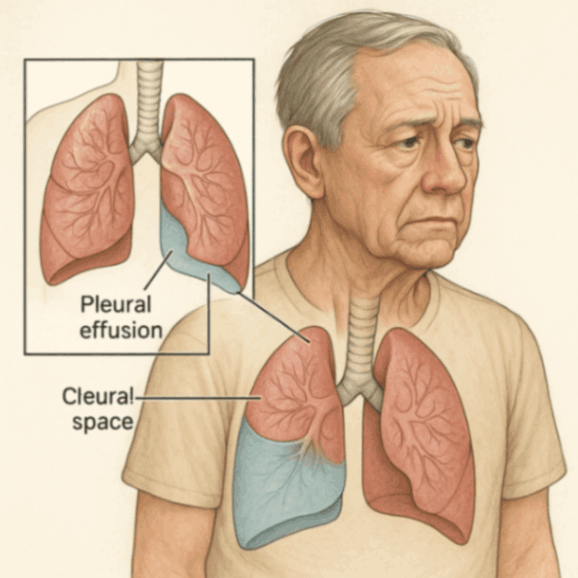
Pleural effusion means an abnormal collection of fluid in the space between the lungs and the chest wall. People often describe it simply as fluid around the lungs. A small amount of fluid is normally present in this area, but excess fluid can develop because of several different medical conditions. Some people with pleural effusion have no obvious symptoms, while others may experience breathlessness, chest discomfort, cough or fever. The right treatment depends on why the fluid has collected, how much is present and whether it is affecting breathing.
For patients searching for Pleural Effusion Treatment in Bhopal, proper evaluation is important because pleural effusion is not a disease with one universal treatment. Dr. Daksh Sharma, MD, DM in Pulmonary Medicine & Critical Care, FCCS, is a Pulmonologist and Interventional Pulmonologist in Bhopal with experience in pulmonary medicine, critical care, thoracic ultrasonography and pleural procedures. His professional experience includes assessment of pleural effusion, pleural biopsy and pleurodesis.
What Is Pleural Effusion Treatment in Bhopal?
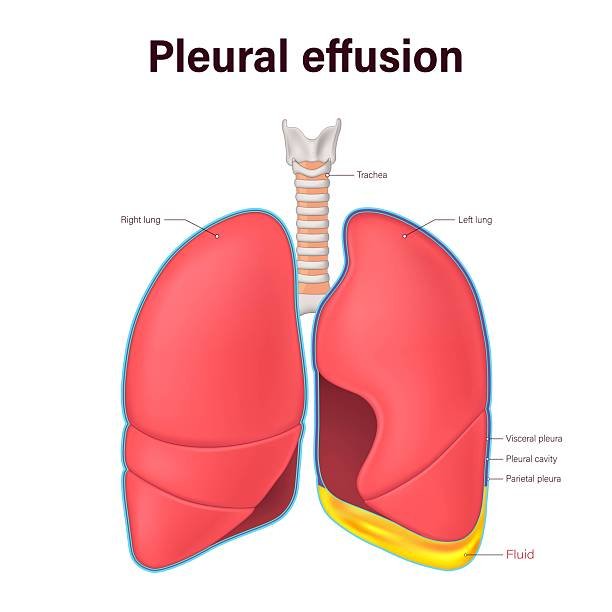
The lungs are covered by a thin protective lining called the pleura. One layer covers the lungs, while the other lines the inside of the chest wall. Between these layers is a very small space called the pleural space. Normally, only a small amount of fluid is present there. This fluid helps the two layers move smoothly as you breathe. A pleural effusion develops when too much fluid collects in this space. The amount can range from a small collection that causes few symptoms to a larger effusion that can put pressure on the lung and make breathing more difficult. Pleural effusion is not a single disease by itself. It is usually a sign of another underlying condition. Therefore, identifying the cause is a major part of Pleural Effusion Treatment.
What Causes Pleural Effusion Treatment in Bhopal?
There are many possible Pleural Effusion Causes, and they can be very different from one patient to another.
Common causes include:
Heart Failure
Heart failure can cause fluid to build up in different parts of the body, including around the lungs. In these cases, treating the underlying heart condition may help control the pleural fluid.
Pneumonia
A lung infection such as pneumonia can sometimes cause fluid to collect around the lung. If infection spreads into the pleural space, the fluid may become complicated or infected and require more specific treatment.
Tuberculosis
Tuberculosis can cause pleural effusion, particularly in areas where TB remains an important health concern. A careful evaluation is needed because symptoms and imaging alone may not always establish the diagnosis.
Cancer
Certain cancers can cause fluid to accumulate in the pleural space. An unexplained or recurrent effusion may therefore require further testing, although having pleural effusion does not automatically mean a person has cancer.
Kidney or Liver Disease
Conditions affecting kidney or liver function can alter fluid balance in the body and may contribute to pleural effusion.
Other Conditions
Inflammatory diseases, pulmonary embolism and other medical conditions can also be associated with pleural fluid.
Because there are so many possible Pleural Effusion Causes, treatment should be based on a proper clinical assessment rather than assuming the reason from symptoms alone.
What Are the Symptoms of Pleural Effusion?
Pleural Effusion Symptoms vary depending on the amount of fluid, how quickly it developed and the underlying condition.
Possible symptoms include:
- Shortness of breath
- Chest discomfort or pain
- Dry cough
- A feeling of heaviness in the chest
- Difficulty breathing when lying down in some cases
- Fatigue
- Fever when an infection is involved
Some smaller effusions cause very few symptoms and may be discovered during a chest X-ray or scan performed for another reason. Breathlessness is one of the more common reasons people seek medical attention. However, breathlessness has many possible causes, including asthma, COPD, heart problems, infections and other lung conditions. Therefore, symptoms alone cannot confirm a pleural effusion.
How Is Pleural Effusion Treated?
The right Pleural Effusion Treatment depends on the cause, the amount of fluid, symptoms and whether the effusion is infected, recurrent or complicated. Treatment may involve one or more approaches.
Treating the Underlying Cause
This is often the most important part of treatment. For example, pleural fluid associated with heart failure may be managed by treating the underlying cardiac condition.
Therapeutic Drainage
If a significant amount of fluid is causing breathing difficulty, drainage may be considered. Thoracentesis is one method of removing pleural fluid.
Chest Tube Drainage
A chest tube may be needed in selected situations, particularly when fluid is infected or complicated and requires ongoing drainage.
Treatment of the Underlying Disease
The long-term plan depends on why the effusion occurred. Treating that underlying condition is often essential to Pleural Effusion Management.
Pleurodesis
For certain recurrent pleural effusions, pleurodesis may be considered. This is a specialist procedure intended to reduce the likelihood of fluid repeatedly collecting in the pleural space.
Patients should not start or stop medicines on their own. The treatment plan needs to be tailored to the individual clinical situation.

Can Pleural Effusion Treatment in Bhopal Come Back?
Yes, Pleural Effusion Treatment in Bhopal can return in some patients. Recurrence depends mainly on the underlying cause and whether that condition can be effectively controlled. For example, recurrent fluid may occur with some heart conditions, cancer, tuberculosis or inflammatory diseases. Treating the underlying problem is therefore an important part of reducing recurrence. If fluid repeatedly returns, additional drainage or specialist procedures may sometimes be considered. In selected cases, pleurodesis can be an option. There is no single approach for all recurrent effusions. Pleural Effusion Management needs to be individualized according to the reason the fluid is returning and the patient’s overall health.
How Is Pleural Effusion Treated?
The right Pleural Effusion Treatment depends on the cause, the amount of fluid, symptoms and whether the effusion is infected, recurrent or complicated.
Treatment may involve one or more approaches.
Treating the Underlying Cause
This is often the most important part of treatment. For example, pleural fluid associated with heart failure may be managed by treating the underlying cardiac condition. An infection requires appropriate treatment of the infection. Similarly, tuberculosis-related effusion requires treatment directed at confirmed TB, while a cancer-related effusion requires evaluation and management of the underlying malignancy.
Therapeutic Drainage
If a significant amount of fluid is causing breathing difficulty, drainage may be considered. Thoracentesis is one method of removing pleural fluid.
Chest Tube Drainage
A chest tube may be needed in selected situations, particularly when fluid is infected or complicated and requires ongoing drainage.
Pleurodesis
For certain recurrent pleural effusions, pleurodesis may be considered. This is a specialist procedure intended to reduce the likelihood of fluid repeatedly collecting in the pleural space.
Treatment of the Underlying Disease
The long-term plan depends on why the effusion occurred. Treating that underlying condition is often essential to Pleural Effusion Management.
Patients should not start or stop medicines on their own. The treatment plan needs to be tailored to the individual clinical situation.
When Does Pleural Effusion Need Drainage?
Not every pleural effusion needs drainage.
Pleural Fluid Drainage may be considered when:
- The fluid is causing significant breathlessness
- The effusion is large
- Infection is suspected or confirmed
- Fluid needs to be examined to determine the cause
- The effusion is complicated
- The fluid repeatedly returns
- Therapeutic drainage is clinically appropriate
A small effusion without significant symptoms may sometimes be monitored while the underlying condition is treated. The decision is based on the patient’s symptoms, imaging, laboratory findings and suspected cause. It is not simply determined by the presence of fluid alone. Pleural Effusion Treatment in Bhopal
Frequently Asked Questions
Pleural effusion is an abnormal collection of fluid in the space between the lungs and the chest wall. A small amount of fluid normally exists there, but excess fluid can develop because of conditions such as heart failure, pneumonia, tuberculosis, cancer or other illnesses. Pleural Effusion Treatment in bhopal depends on the cause, the amount of fluid and whether it is affecting breathing.
Fluid Around the Lungs Treatment in bhopal begins with finding out why the fluid developed. Common causes include heart failure, pneumonia, tuberculosis, cancer, kidney or liver disease, inflammatory conditions and pulmonary embolism. Different causes require different approaches. Therefore, Pleural Effusion Causes should always be evaluated in the context of the patient's symptoms, medical history and other test results.
No. Pleural Fluid Drainage is not necessary for every patient. A small effusion may sometimes be monitored while the underlying condition is treated. Drainage may be considered when the fluid is large, causes significant breathlessness, is infected, requires diagnostic analysis or is otherwise clinically complicated. The decision for Pleural Effusion Treatment in bhopal should be made by a healthcare professional after reviewing the patient's symptoms and investigations.
Thoracentesis is a medical procedure in which a doctor removes pleural fluid using a needle. The fluid may be tested to help identify the cause, and removing fluid can sometimes relieve breathing difficulty. It is not required for every effusion. Whether thoracentesis is appropriate in Pleural Effusion Treatment in bhopal depends on the amount of fluid, symptoms, suspected cause and the overall clinical situation.
Yes, tuberculosis can cause pleural effusion. However, not every pleural effusion is caused by TB. Doctors may use imaging, pleural fluid analysis and other investigations to evaluate the possibility. A diagnosis of Pleural Effusion due to Tuberculosis should be based on appropriate medical assessment rather than symptoms alone. Patients should not start tuberculosis treatment without a qualified healthcare professional confirming the appropriate diagnosis and treatment plan.
Yes, certain cancers can cause pleural effusion. However, finding fluid around the lungs does not automatically mean that cancer is present. When an effusion is unexplained or repeatedly returns, doctors may consider imaging, pleural fluid analysis, cytology or biopsy when clinically appropriate. If you are looking for Pleural Effusion Treatment in Bhopal, a pulmonologist can help determine whether further investigation is needed to rule out or confirm cancer-related causes.
Yes, Pleural Effusion Treatment in Bhopal can recur when the underlying condition continues to cause fluid accumulation. Recurrence can occur with some heart conditions, tuberculosis, cancer and inflammatory diseases. Managing the underlying cause is an important part of Pleural Effusion Management. In selected recurrent cases, repeat drainage or procedures such as pleurodesis may be considered based on the patient's individual clinical situation.
Pleural Effusion Diagnosis may involve a medical history, physical examination, chest X-ray, thoracic ultrasound or CT scan. In selected patients, thoracentesis may be performed so that the fluid can be analyzed. A pleural biopsy may also be considered when the cause remains unclear. Not everyone needs every test; the evaluation depends on the patient's symptoms, imaging and suspected underlying condition causing Pleural Effusion.
Pleural Effusion Treatment in Bhopal can range from a small, relatively uncomplicated collection to a condition requiring prompt treatment. Its seriousness depends on the amount of fluid, the effect on breathing and the underlying cause. Infection and some other causes may require urgent attention. If you have significant breathlessness, severe chest symptoms or rapid deterioration, seek urgent medical care for Pleural Effusion Treatment in bhopal rather than waiting for a routine appointment.
Consider seeing a Pleural Effusion Doctor in Bhopal if imaging has shown fluid around your lungs, or if you have unexplained breathlessness, persistent chest symptoms, recurrent pleural effusion or fever with respiratory complaints. A pulmonologist can review your medical history and reports, assess the likely cause of Pleural Effusion, and determine whether observation, further testing, drainage or another treatment approach is appropriate.