
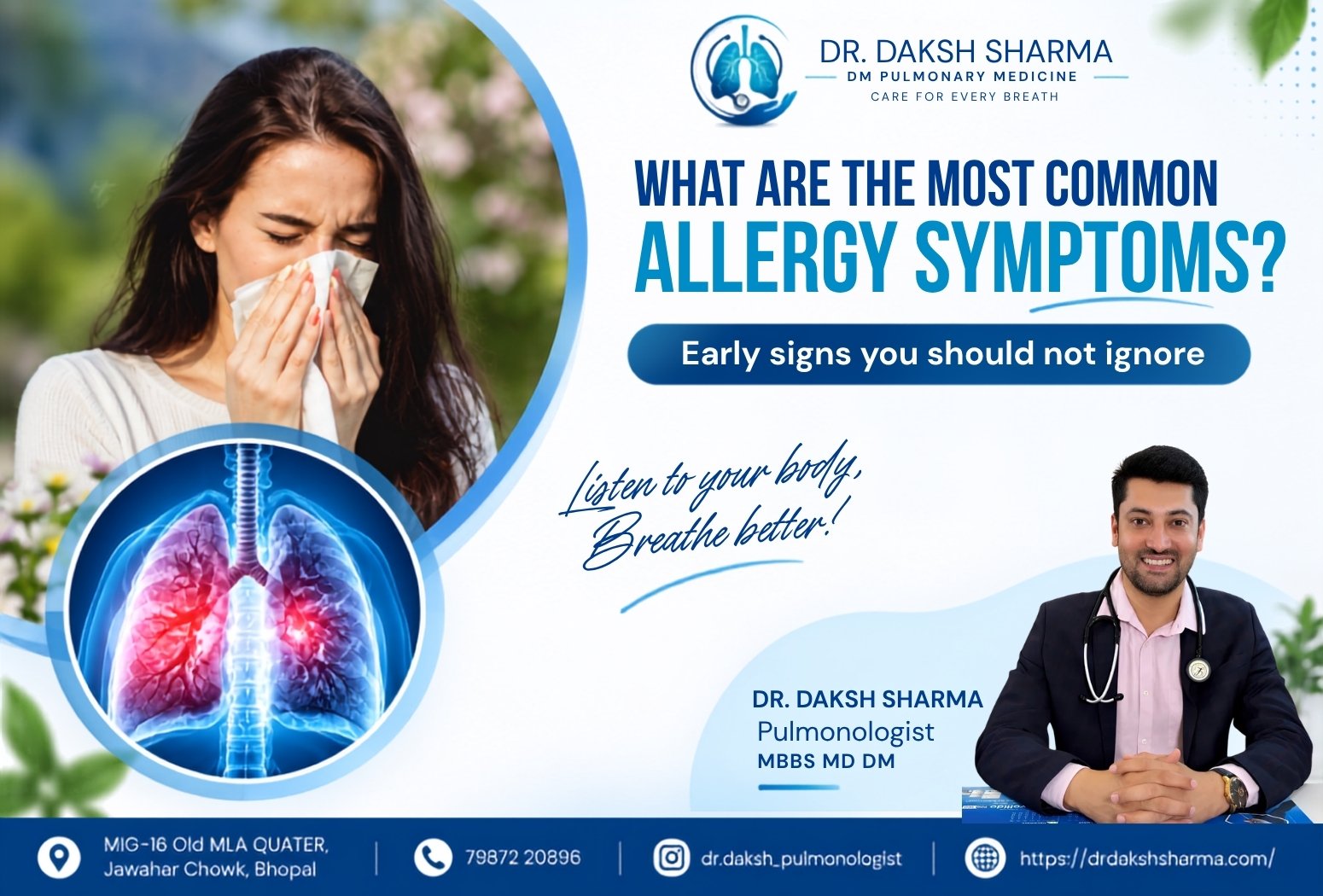
Allergies can affect much more than the nose. Depending on the allergen and how a person’s immune system responds, an allergic reaction may cause sneezing, itchy eyes, skin irritation, coughing or even breathing difficulty. Some symptoms appear soon after exposure, while others may become noticeable after repeated contact with a trigger. The tricky part is that Common Allergy Symptoms can look similar to a cold, sinus problem, asthma or another respiratory condition. A blocked nose, for example, does not automatically mean an allergy. Likewise, a cough or wheezing should not always be blamed on dust or weather changes.
If you are looking for Allergy Treatment in Bhopal, understanding the pattern of your symptoms is a useful first step. Dr. Daksh Sharma, MD, DM (Pulmonary Medicine & Critical Care), FCCS, is a pulmonologist and interventional pulmonologist with experience in pulmonary medicine, critical care and respiratory conditions. His areas of interest include bronchial asthma and allergic respiratory disorders, making respiratory evaluation particularly relevant when allergies are associated with breathing symptoms.
What Is an Allergy?
An allergy occurs when the immune system reacts to a substance that is usually harmless to most people. These substances are called allergens. When a susceptible person encounters an allergen, the immune system may release chemicals that cause inflammation. This can produce symptoms in the nose, eyes, skin, throat or respiratory system.
Common allergens include:
- Pollen
- Dust mites
- Pet dander
- Mold
- Certain foods
- Insect stings
- Some medicines
- Certain workplace substances
Allergies are different from infections. A cold, for example, is caused by a virus, while an allergy results from an immune response to an allergen. The response also varies from person to person. One individual may sneeze repeatedly after dust exposure, while another may develop itchy eyes or a skin reaction. Someone with allergic asthma may experience coughing or wheezing after exposure to a particular trigger. That is why identifying the pattern of symptoms and possible exposures is often more useful than focusing on one symptom alone.

What Are the Most Common Allergy Symptoms?
Common Allergy Symptoms can affect several parts of the body. Not everyone experiences all of them, and the symptoms can vary depending on the allergen involved.
Nose and Sinus Symptoms
Nasal symptoms are among the most familiar signs of allergies. They may include:
- Repeated sneezing
- Runny nose
- Stuffy or blocked nose
- Itchy nose
- Nasal irritation
- Postnasal drainage
Some people notice these symptoms after cleaning a dusty room, spending time outdoors during a high-pollen period or being around animals.
Eye Symptoms
Allergies can also affect the eyes. Possible symptoms include:
- Itchy eyes
- Watery eyes
- Redness
- Burning or irritation
- Puffy eyelids
When itchy, watery eyes occur together with repeated sneezing and a runny nose, an allergic cause may be worth considering.
Throat Symptoms
An allergic response can cause an itchy or irritated throat. Postnasal drainage may also create a sensation of mucus running down the back of the throat.
This can lead to repeated throat clearing or coughing.
Skin Symptoms
Some allergic reactions affect the skin and may cause:
- Itching
- Hives
- Redness
- Raised patches
- Rash
Hives, also called urticaria, are usually raised and itchy areas that can appear suddenly.
Breathing Symptoms
Some people develop respiratory symptoms after exposure to allergens. These may include:
- Coughing
- Wheezing
- Chest tightness
- Breathlessness
Breathing symptoms deserve particular attention. Allergies can sometimes trigger asthma, but persistent cough or breathlessness may also have other causes.
What Are the Early Signs of an Allergy?
The Early Signs of Allergies may appear shortly after exposure to a trigger. For some people, the first clue is a sudden series of sneezes. Others may notice an itchy nose, watery eyes or a blocked nose.
Early symptoms can include:
- Repeated sneezing
- Itchy nose or throat
- Runny nose
- Nasal congestion
- Watery or itchy eyes
- Mild skin itching
- A small rash or hives
- Coughing in some respiratory allergies
The timing can provide useful information. If symptoms repeatedly appear after exposure to dust, pollen, animals or another specific substance, that pattern may be relevant. However, symptoms do not always occur immediately. The timing depends on the type of allergic response and the individual’s sensitivity.
It is also possible for symptoms that look allergic to have another explanation. A viral infection, sinus condition, asthma or environmental irritation can produce overlapping symptoms. Therefore, recurring Allergy Symptoms in Adults or children should be assessed according to the complete history rather than one symptom alone.
Common Allergy Triggers
Knowing your personal triggers can make Allergy Treatment in Bhopal more practical because reducing exposure can sometimes reduce symptom flare-ups.
Dust Mites
Dust mites are tiny organisms commonly found in household dust, bedding and upholstered items. Their particles can trigger symptoms in sensitive people.
Pollen
Pollen from plants, trees and grasses can cause seasonal symptoms in susceptible individuals. Sneezing, itchy eyes and a runny nose are common complaints.
Pet Dander
Proteins found in skin flakes, saliva and other material from animals can trigger allergic symptoms. Pet hair itself is not always the actual allergen.
Mold
Mold spores can become a problem in damp or poorly ventilated areas. Some people develop nasal or respiratory symptoms after exposure.
Foods
Certain foods can cause allergic reactions ranging from mild symptoms to severe reactions. Food allergies can affect the skin, digestive system, mouth and respiratory system.
Insect Stings
Stings from insects such as bees or wasps can cause local swelling. In susceptible people, they can trigger a serious systemic allergic reaction.
Medicines
Some medicines can cause allergic reactions. However, not every side effect or unpleasant response to a medicine is an allergy.
Workplace Exposures
Dust, chemicals, animal proteins and other substances encountered at work can contribute to Respiratory Allergy Symptoms in susceptible individuals.
Smoke and strong chemical irritants can also worsen respiratory symptoms, although they are not necessarily allergens themselves.
What Are Respiratory Allergy Symptoms?
Respiratory Allergy Symptoms occur when an allergic response affects the upper or lower respiratory tract.
Upper-airway symptoms commonly include:
- Sneezing
- Runny nose
- Nasal congestion
- Itchy nose
- Postnasal drip
- Throat irritation
Lower-airway symptoms may include coughing or wheezing in some people, particularly when an allergic response is associated with asthma. For example, someone may notice coughing or chest tightness after exposure to dust. In a person with allergic asthma, exposure to an allergen can contribute to airway narrowing and inflammation.
However, a cough is not automatically an allergy symptom. Persistent coughing can also occur with asthma, infections, acid reflux, smoking-related conditions and other lung problems. The same caution applies to breathlessness. Recurrent breathing difficulty deserves medical assessment rather than being repeatedly attributed to an environmental allergy.
Can Allergies Cause Coughing and Breathing Problems?
Yes, allergies can contribute to coughing and, in some people, breathing problems. One possible reason is postnasal drainage. When the nose produces excess mucus, it can drain toward the throat and trigger coughing or throat clearing. Allergic inflammation can also irritate the airways. In people with asthma, exposure to an allergen may trigger airway narrowing, resulting in coughing, wheezing, chest tightness or breathlessness. This is where Allergy and Asthma can overlap.
However, persistent breathing difficulty should not simply be treated as an allergy. If you repeatedly experience wheezing, chest tightness or breathlessness after exposure to dust, pollen or other triggers, a pulmonology evaluation may help determine whether asthma or another respiratory condition is involved. For patients considering Allergy Treatment in Bhopal, identifying whether symptoms are coming from the upper airway, lower airway or another condition is an important part of appropriate care.
Allergy Symptoms vs Common Cold: How Can You Tell the Difference?
Allergies and colds can look remarkably similar, especially at the beginning. There are some patterns that may provide clues, but they cannot replace medical evaluation.
| Feature | Allergies | Common Cold |
|---|---|---|
| Onset | Often linked to exposure to a trigger | Usually follows exposure to a virus |
| Sneezing | Very common | Common |
| Itchy eyes | Common | Less typical |
| Runny nose | Common | Common |
| Nasal congestion | Common | Common |
| Fever | Usually absent | May occur |
| Symptoms after specific exposure | Often | Not usually |
| Recurring at the same time or place | Possible | Less typical |
| Duration | May continue while exposure continues | Usually improves as the infection resolves |
Allergies often cause itching of the nose or eyes, which is less typical of a common cold. Fever is also more suggestive of an infection than an uncomplicated allergy. Still, there is plenty of overlap. If symptoms keep returning, last unusually long or are associated with breathing problems, medical evaluation can help clarify the cause.
Can Allergies Trigger Asthma?
Yes. Allergens can trigger asthma symptoms in people whose airways are sensitive to those exposures. Common triggers may include dust mites, pollen, mold, animal allergens and other environmental substances.
When an allergen triggers asthma, the airways can become inflamed and narrow. This may cause:
- Wheezing
- Coughing
- Chest tightness
- Breathlessness
- Breathing difficulty during or after exposure
Not everyone with an allergy develops asthma, and not everyone with asthma has allergies. Still, recurring Allergy and Asthma symptoms deserve attention, particularly when breathing problems interfere with sleep, exercise, work or daily activities. Dr. Daksh Sharma’s background in pulmonary medicine and critical care, along with his stated interest in bronchial asthma and allergic respiratory disorders, is relevant when allergic symptoms are accompanied by recurring respiratory complaints.
When Should Allergy Symptoms Not Be Ignored?
Mild sneezing or occasional itching may not require immediate medical attention. However, recurring or worsening symptoms deserve a closer look.
Consider professional evaluation if you experience:
- A cough that keeps returning
- Persistent nasal or throat symptoms
- Recurrent wheezing
- Repeated breathlessness
- Chest tightness
- Symptoms that disturb sleep
- Symptoms that interfere with exercise or daily activities
- Frequent symptoms after exposure to a particular trigger
- Repeated need for symptom-relief medicines
- Breathing problems that have no clear explanation
This is particularly relevant when symptoms are being repeatedly treated without understanding the underlying cause. A person may think they have a simple dust allergy when the actual problem is allergic asthma, chronic sinus disease or another respiratory condition. For this reason, Allergy Symptoms and Treatment should be approached according to the individual’s symptoms, medical history and possible triggers.
What Are the Warning Signs of a Severe Allergic Reaction?
Most allergies are not life-threatening. However, a severe allergic reaction called anaphylaxis can develop rapidly and requires emergency medical care.
Warning signs can include:
- Difficulty breathing
- Severe wheezing
- Swelling of the lips, tongue or throat
- Difficulty swallowing
- Fainting
- Marked dizziness
- Sudden widespread hives accompanied by breathing or circulation problems
A person may have more than one symptom at the same time. If anaphylaxis is suspected, seek emergency medical care immediately. Do not wait for a routine appointment with an Allergy Doctor in Bhopal, and do not delay emergency care while trying to determine the exact trigger. People who have previously been prescribed emergency treatment for a severe allergic reaction should follow their individualized emergency plan while arranging urgent medical care.
How Are Allergies Diagnosed?
There is no single test that is necessary for every person with suspected allergies.
Diagnosis generally begins with a detailed medical history. A doctor may ask:
- What symptoms do you experience?
- When do they occur?
- How long do they last?
- What were you doing before they started?
- Do symptoms occur at home, work or outdoors?
- Do they appear during particular seasons?
- Do pets, dust, foods or medicines seem to trigger them?
- Are there associated breathing symptoms?
A physical examination can provide additional information.
Allergy Testing
When the history suggests a specific allergic trigger, allergy testing may sometimes be considered. The type of test depends on the suspected allergen and the clinical situation.
Not everyone needs testing. A positive test also needs to be interpreted in the context of the person’s actual symptoms and exposure history.
Respiratory Evaluation
If cough, wheezing or breathlessness is present, a doctor may consider pulmonary function testing or other respiratory investigations to evaluate conditions such as asthma.
This is especially useful when Respiratory Allergy Symptoms overlap with possible airway disease.
How Can Allergy Symptoms Be Managed?
Management depends on the type of allergy, the severity of symptoms and the triggers involved.
A practical approach may include:
Identify Relevant Triggers
Understanding when symptoms appear can help identify possible allergens. A simple symptom diary can sometimes reveal patterns involving dust, pollen, animals, workplace exposure or other triggers.
Reduce Exposure
Once a likely trigger is identified, reducing exposure may help limit symptoms. This should be practical rather than an attempt to avoid every possible substance.
Follow the Treatment Plan
If a healthcare professional has recommended treatment, follow the plan as directed. Prescription medicines should not be started, stopped or changed without appropriate medical advice.
Manage Associated Asthma
If allergies are triggering asthma, both conditions may need to be considered. Controlling the underlying airway condition is an important part of respiratory care.
Monitor Changes
Pay attention to symptoms that become more frequent, severe or disruptive. A change in breathing symptoms may warrant reassessment.
The goal of Allergy Treatment in Bhopal is not simply to respond to individual symptoms. A proper evaluation can help identify the likely cause and develop an appropriate management approach.
How Can You Reduce Exposure to Common Allergens?
A few everyday measures may help reduce exposure to known triggers.
Reduce Household Dust
Regular cleaning can help limit dust accumulation. Bedding, mattresses and other areas where dust collects deserve particular attention when dust exposure is a known trigger.
Wash Bedding Regularly
Regular washing of bedding can help reduce exposure to dust mites and accumulated allergens.
Address Visible Mold
Damp areas and visible mold should be addressed appropriately. Improving ventilation and controlling moisture can help reduce mold growth.
Pay Attention to Pollen Exposure
If pollen is a known trigger, symptoms may be more noticeable during certain seasons or outdoor activities. Following local air-quality and pollen information, where available, can help with planning.
Avoid Tobacco Smoke
Smoke can irritate the airways and worsen respiratory symptoms, even when it is not the allergen causing the reaction.
Consider Workplace Protection
If symptoms repeatedly occur around workplace dust, fumes or chemicals, discuss appropriate protective measures with your employer and healthcare professional.
These steps cannot guarantee that allergies will disappear. They are intended to reduce avoidable exposure when a particular trigger has been identified.
When Should You See a Pulmonologist for Allergy-Related Symptoms?
Many allergies can primarily affect the nose, eyes or skin. However, respiratory symptoms may require a different level of evaluation.
Consider consulting a Pulmonologist in Bhopal if you experience:
- Persistent cough
- Recurrent wheezing
- Breathlessness
- Chest tightness
- Repeated symptoms after dust or other environmental exposure
- Possible allergic asthma
- Symptoms that disturb sleep
- Breathing symptoms that interfere with daily activities
- Repeated respiratory complaints despite previous treatment
A pulmonologist can assess whether the symptoms are related to asthma, another airway condition or a different respiratory problem.
For someone searching for an Allergy Specialist in Bhopal because of coughing or breathing difficulty, understanding whether the allergy is affecting the respiratory system is particularly important.
Frequently Asked Questions About Allergy Symptoms
1. What are the first signs of an allergy?
The Early Signs of Allergies may include repeated sneezing, an itchy nose or throat, watery eyes, a runny or blocked nose, skin itching or a mild rash. Some people may also develop coughing after exposure to a respiratory trigger. The timing and pattern matter because similar symptoms can occur with infections and other conditions. Persistent or recurring symptoms may require professional evaluation.
2. What are the most common allergy symptoms?
The most Common Allergy Symptoms include sneezing, runny or blocked nose, itchy or watery eyes, throat irritation and skin itching. Some people develop hives, while others may experience cough, wheezing or breathing difficulty when the respiratory system is involved. Not everyone has the same symptoms. If symptoms repeatedly occur after a particular exposure, discussing the pattern with an Allergy Doctor in Bhopal may be helpful.
3. Can allergies cause a cough?
Yes, allergies can contribute to coughing. One common reason is postnasal drainage, where mucus from the nose moves toward the throat and causes irritation. Allergic inflammation can also affect the airways, particularly in people with Allergy and Asthma. However, a persistent cough can have many other causes. If coughing continues or is associated with wheezing or breathlessness, a respiratory evaluation may be appropriate.
4. Can allergies cause breathing problems?
Allergies can contribute to breathing problems, particularly when an allergen triggers asthma. Symptoms may include wheezing, chest tightness, coughing or breathlessness. However, not every breathing problem is caused by an allergy. Persistent or unexplained breathlessness should be medically assessed rather than repeatedly attributed to dust, pollen or another trigger. A pulmonologist can evaluate whether asthma or another respiratory condition may be involved.
5. Can allergies cause wheezing?
Yes, allergies can trigger wheezing in people who have sensitive airways or allergic asthma. Wheezing is a whistling sound that may occur when airflow through narrowed airways becomes restricted. Repeated wheezing should not simply be considered a normal allergy symptom. An Allergy Specialist in Bhopal or pulmonologist can assess whether asthma or another airway condition may be contributing to the respiratory symptoms.
6. How can I tell if my symptoms are allergies or a cold?
Allergies often cause sneezing, itchy eyes, nasal congestion and symptoms that recur after particular exposures. A cold may include similar nasal symptoms and can sometimes cause fever or general body discomfort. However, there is considerable overlap. Symptoms that repeatedly occur during certain seasons or after exposure to a particular trigger may suggest an allergy, but a medical assessment may be needed for a clear diagnosis.
7. What are common allergy triggers?
Common triggers include dust mites, pollen, pet dander, mold, certain foods, insect stings, some medicines and workplace substances. Tobacco smoke and strong chemical irritants can worsen respiratory symptoms but are not necessarily allergens themselves. Keeping track of when symptoms occur can help identify possible triggers. Once a trigger is suspected, an Allergy Doctor in Bhopal can advise whether further evaluation or testing is appropriate.
8. Can allergies turn into asthma?
Allergies do not simply “turn into” asthma in every person. However, allergens can trigger asthma symptoms in people who are susceptible to airway inflammation. Recurrent coughing, wheezing, chest tightness or breathlessness after allergen exposure may suggest Allergy and Asthma overlap. If these symptoms continue, professional respiratory evaluation can help determine whether asthma or another condition is involved.
9. When should I see a doctor for allergies?
Consider medical evaluation when Allergy Symptoms and Treatment become difficult to manage, keep returning, disturb sleep or interfere with normal activities. Persistent cough, recurrent wheezing, breathlessness or chest tightness are especially important reasons to seek assessment. For respiratory complaints in Bhopal, a pulmonologist can evaluate whether allergies, asthma or another lung condition may be contributing to the symptoms.
10. What should I do if I have difficulty breathing during an allergic reaction?
Difficulty breathing during an allergic reaction can be a sign of anaphylaxis, a potentially life-threatening emergency. Swelling of the tongue or throat, severe wheezing, fainting or marked dizziness are also warning signs. Seek emergency medical care immediately. Do not wait for a routine Allergy Treatment in Bhopal appointment or delay emergency assessment while trying to identify the exact cause of the reaction.
Conclusion
Allergies can cause symptoms ranging from repeated sneezing and itchy eyes to skin reactions and respiratory problems. Recognizing the pattern of symptoms can help identify possible triggers, but symptoms alone cannot always distinguish an allergy from a cold, asthma or another condition. If symptoms repeatedly occur after dust, pollen, pets or other exposures, reducing contact with the suspected trigger may help. However, persistent coughing, wheezing, breathlessness or chest tightness deserves proper medical evaluation.
Severe breathing difficulty, throat swelling, fainting or other signs of anaphylaxis require immediate emergency care. If you are looking for Allergy Treatment in Bhopal, particularly for allergy-related cough, wheezing or breathing problems, consulting a qualified pulmonologist can help determine whether the symptoms are related to allergies, asthma or another respiratory condition.