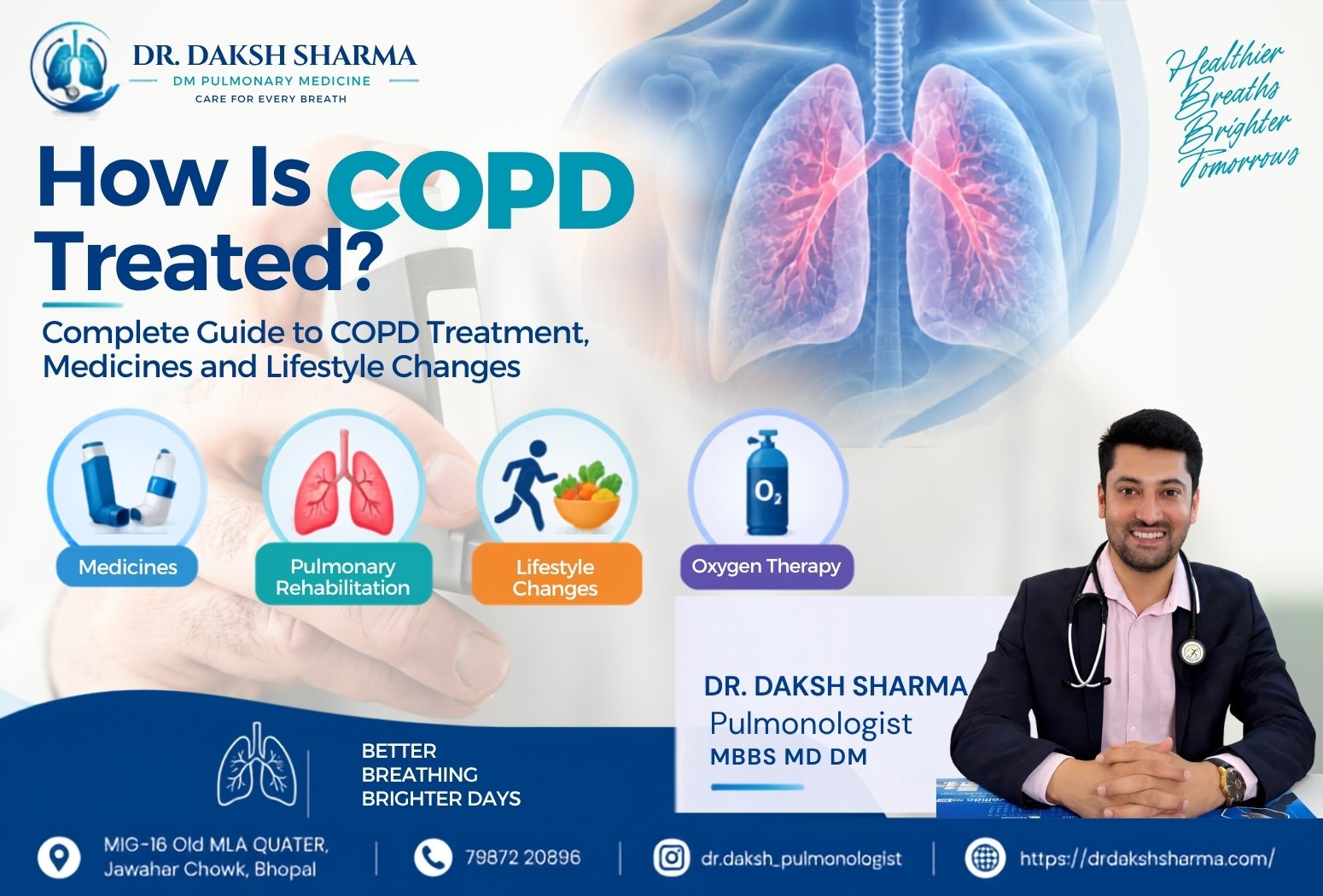
COPD, or Chronic Obstructive Pulmonary Disease, is a long-term condition that affects the way air moves through the lungs. Treatment does not follow one fixed formula. Instead, COPD Treatment in Bhopal is generally planned around the person’s symptoms, lung function, previous flare-ups, smoking or environmental exposure, and other health conditions. The main goals are to make breathing easier, reduce symptoms, support daily activity, lower the risk of flare-ups and help maintain quality of life. Treatment may include inhaled medicines, smoking cessation, physical activity, pulmonary rehabilitation, infection prevention and, for selected patients, oxygen therapy. If you are looking for COPD Treatment in Bhopal, a pulmonologist can assess whether your symptoms are due to COPD and determine which treatment options are appropriate. Dr. Daksh Sharma, MD, DM (Pulmonary Medicine & Critical Care), FCCS, is a pulmonologist and interventional pulmonologist with experience in pulmonary medicine, critical care and complex respiratory conditions.
What Is COPD?
COPD is a chronic lung condition in which airflow through the airways remains limited. The term commonly includes conditions such as chronic bronchitis and emphysema. In chronic bronchitis, the airways remain inflamed and may produce excess mucus. In emphysema, the tiny air sacs in the lungs become damaged, reducing the lungs’ ability to move air efficiently.
As a result, a person may develop coughing, mucus production, wheezing or breathlessness. These symptoms often develop gradually, which means some people may not recognize the change in their breathing at first. COPD is different from a temporary chest infection. It is a long-term condition that requires ongoing management. The appropriate COPD Treatment depends on the individual’s symptoms and clinical assessment.
How Is COPD Treated?
So, how is COPD treated? The answer depends on the person.
A treatment plan may include:
- Inhaled medicines
- Bronchodilators
- Selected anti-inflammatory inhaled medicines
- Smoking cessation
- Pulmonary rehabilitation
- Appropriate physical activity
- Vaccination and infection prevention
- Oxygen therapy for selected patients
- Management of COPD flare-ups
- Regular medical follow-up
The purpose of COPD Management is not simply to provide temporary relief. A pulmonologist also considers how symptoms affect walking, work, sleep, exercise and other daily activities.
Treatment may need to change over time. Someone with occasional symptoms and no recent flare-ups may have different needs from a person who has frequent exacerbations or significant airflow limitation.
COPD Treatment Depends on the Individual
Two people with COPD can have very different symptoms and may therefore need different treatment approaches.
A doctor may consider:
- How often breathlessness occurs
- Severity and pattern of symptoms
- Lung function test results
- Previous COPD flare-ups
- Smoking history
- Exposure to air pollution, dust or chemical fumes
- Oxygen levels when clinically relevant
- Exercise tolerance
- Other medical conditions
- Previous response to treatment
- Current medicines and inhaler technique
This is why there is no single “best” COPD medicine for everyone.
A COPD Specialist in Bhopal can bring these factors together before deciding how the condition should be managed. The treatment plan should be reviewed if symptoms change or flare-ups become more frequent.
Medicines Used to Treat COPD
Medicines are an important part of COPD Treatment, particularly when symptoms affect everyday activities. Different medicines work in different ways, and not every patient needs every type.
Bronchodilators
Bronchodilators help relax the muscles around the airways, allowing them to remain more open. This can make it easier for air to move in and out of the lungs. They may be prescribed to reduce breathlessness, wheezing and other symptoms. The choice depends on the individual’s condition and response to treatment.
Long-Acting Bronchodilators
Long-acting bronchodilators are designed to provide ongoing airway relaxation over an extended period. They may be used as part of regular COPD Medication for patients who have persistent symptoms. The specific medicine and delivery device are selected by the treating doctor.
Short-Acting Reliever Medicines
Some patients may be prescribed short-acting inhaled medicines for quicker relief when symptoms occur. Their use should follow an individualized treatment plan. If you find that you are frequently relying on a reliever medicine, this may be a reason to discuss your symptoms with your doctor rather than simply increasing its use yourself.
Inhaled Corticosteroids
Inhaled corticosteroids reduce inflammation in the airways. They are useful for selected people with COPD, but they are not automatically appropriate for every patient. A doctor may consider factors such as exacerbation history, symptoms and other clinical findings before deciding whether an inhaled corticosteroid has a role in treatment.
Combination Inhalers
Some inhalers contain more than one medicine. Combining medicines with different actions can be useful for selected patients whose symptoms require more than one type of treatment. The right combination depends on the individual’s clinical situation.
Medicines During COPD Flare-Ups
Treatment during a COPD exacerbation may differ from the patient’s usual maintenance plan. Depending on the cause and severity, a healthcare professional may consider changes in inhaled treatment or other medicines. Because flare-ups can vary considerably, patients should seek medical advice rather than self-prescribing medicines.
Why Inhalers Are Important in COPD Treatment
Many COPD Inhalers deliver medicine directly into the airways. This allows the medication to act where it is needed. However, the device only works properly when it is used correctly. Common problems include inhaling at the wrong time, using an incorrect technique or not completing the inhalation properly.
For this reason, inhaler technique should be checked periodically. If symptoms continue despite regular use, the issue may not always be that the medicine is ineffective. Technique, adherence, disease progression or another respiratory problem may need to be considered. Patients should also use their prescribed inhalers according to their doctor’s instructions. Do not stop or change prescription treatment simply because symptoms improve for a while.
Can COPD Be Treated Without Medicines?
Lifestyle and supportive measures are an important part of COPD Management, but they should not automatically replace prescribed treatment.
For some patients, non-medication measures can make a meaningful difference to daily function and respiratory health. These may include:
- Stopping smoking
- Staying physically active when medically appropriate
- Pulmonary rehabilitation
- Maintaining adequate nutrition
- Reducing exposure to smoke, dust and harmful fumes
- Following vaccination advice
- Managing other health conditions
- Attending regular follow-up appointments
The right combination depends on the individual’s condition. Lifestyle changes work best when they are considered alongside, rather than automatically instead of, medically recommended treatment.
Smoking Cessation and COPD
If you smoke, quitting is one of the most important steps you can take after a COPD diagnosis. Continued exposure to tobacco smoke can contribute to ongoing lung irritation and damage. Stopping smoking removes that continued exposure and can be beneficial even when COPD has already been diagnosed.
It is also normal for quitting to be difficult. Nicotine dependence can make the process challenging, particularly for people who have smoked for many years. Rather than approaching smoking cessation with blame, discuss it with a healthcare professional. Support can be tailored to your smoking pattern, previous attempts to quit and individual circumstances. For people receiving COPD Treatment in Bhopal, smoking cessation should be considered an important part of the overall respiratory care plan when tobacco exposure is present.
Lifestyle Changes That Can Help Manage COPD
Medication is only one part of living with COPD. Everyday habits can also influence how well a person manages the condition.
Stay Physically Active
Regular movement can help maintain muscle strength and physical capacity. The appropriate level of activity depends on your symptoms and overall health.
If normal activities cause significant breathlessness, discuss an appropriate exercise plan with your doctor rather than suddenly starting strenuous exercise.
Consider Pulmonary Rehabilitation
Pulmonary rehabilitation can help selected patients improve their ability to perform daily activities and manage breathlessness.
Maintain Healthy Nutrition
Adequate nutrition supports general health. People with significant COPD or other medical conditions may need individualized dietary advice.
Avoid Tobacco Smoke
Avoiding active and second-hand tobacco smoke is important for people with chronic lung disease.
Reduce Harmful Exposures
Where possible, reduce exposure to dust, chemical fumes, biomass smoke and other known respiratory irritants.
Follow Vaccination Advice
Respiratory infections can be particularly troublesome for people with COPD. Discuss recommended vaccinations with your healthcare professional.
Get Enough Rest
Poor sleep and excessive fatigue can make daily activities harder. Persistent sleep problems should also be discussed with a doctor.
Recognize Changes in Symptoms
Knowing your usual pattern of cough, mucus and breathlessness can make it easier to recognize when something has changed.
These measures can support COPD Management, but they should not be presented as a cure.
What Is Pulmonary Rehabilitation?
Pulmonary rehabilitation is a structured programme designed to help people with chronic respiratory conditions become more physically capable and confident in managing everyday activities.
It may include:
- Exercise training
- Breathing strategies
- Education about lung disease
- Techniques for conserving energy
- Guidance for managing breathlessness
- Support with everyday physical activities
Pulmonary rehabilitation is not simply “exercise for the lungs.” It takes a broader approach to physical function and self-management. A healthcare professional can determine whether pulmonary rehabilitation is appropriate based on the patient’s symptoms, physical ability and overall medical condition. For some people, it can become a useful part of their long-term COPD Treatment plan.
Is Oxygen Therapy Used for COPD?
Oxygen therapy may be appropriate for selected people with COPD who have persistently low oxygen levels. It is not automatically required simply because someone has COPD or experiences breathlessness.
A doctor may assess oxygen levels and other clinical factors before deciding whether oxygen therapy is appropriate. Oxygen should be prescribed and monitored by a healthcare professional. Using oxygen without proper assessment is not a safe substitute for medical evaluation.
If you have been advised to use oxygen, your healthcare team can explain when and how it should be used and whether your requirements need to be reassessed over time.
How Are COPD Flare-Ups Treated?
A COPD flare-up, also called an exacerbation, occurs when usual symptoms become noticeably worse.
Signs may include:
- Increased breathlessness
- More frequent or severe coughing
- Increased mucus production
- A change in mucus appearance
- Greater difficulty performing usual activities
- A noticeable decline from your normal breathing pattern
Flare-ups can sometimes be linked to respiratory infections, pollution or other irritants, although the cause is not always obvious. Treatment depends on the severity and cause of the exacerbation. A doctor may assess breathing, oxygen levels and other clinical findings before deciding what treatment is required. People with repeated flare-ups may need their regular COPD Medication and management plan reviewed. Severe or rapidly worsening breathlessness, difficulty speaking because of breathlessness, confusion, unusual drowsiness or bluish lips or face requires urgent medical attention.
Can COPD Be Cured?
COPD is generally considered a chronic condition, and there is currently no simple permanent cure that reverses established COPD in every patient. However, this does not mean that nothing can be done.
Appropriate treatment can help patients manage symptoms, remain active within their abilities and reduce the impact of flare-ups. Smoking cessation, prescribed medicines, physical activity, pulmonary rehabilitation and appropriate follow-up can all have a role. The goal of COPD Treatment in Bhopal is therefore not to promise a cure. It is to provide appropriate, evidence-based management based on the patient’s condition and needs.
How Can COPD Be Prevented From Getting Worse?
There is no way to predict exactly how COPD will change in every individual. However, several measures can support better long-term respiratory care.
These include:
- Stop smoking if you smoke
- Use prescribed medicines as directed
- Learn and regularly review correct inhaler technique
- Attend recommended follow-up visits
- Stay physically active within your medical limits
- Consider pulmonary rehabilitation when appropriate
- Follow vaccination advice
- Reduce exposure to smoke, dust and harmful fumes
- Maintain good nutrition and general health
- Recognize worsening symptoms early
- Seek medical attention when flare-ups occur
These steps do not guarantee that COPD will never progress. They are part of a broader approach to COPD Management and respiratory health.
When Should You See a Pulmonologist for COPD?
You should consider professional evaluation if breathing symptoms persist or begin affecting everyday activities.
A consultation may be appropriate if you have:
- Persistent breathlessness
- A chronic or recurring cough
- Regular mucus production
- Repeated chest infections
- Frequent COPD flare-ups
- Increasing difficulty walking or exercising
- Symptoms despite prescribed treatment
- A history of long-term smoking with respiratory symptoms
- Long-term exposure to dust, fumes or air pollution
A COPD Doctor in Bhopal can review your symptoms and medical history and determine whether spirometry, imaging or other respiratory investigations are appropriate. Professional evaluation is particularly useful when you are unsure whether symptoms are caused by COPD, asthma or another condition.
Why Consult Dr. Daksh Sharma for COPD Care in Bhopal?
Dr. Daksh Sharma is a Pulmonologist and Interventional Pulmonologist with postgraduate and super-specialty training in pulmonary medicine and critical care. He also has experience with bronchoscopy and interventional pulmonology as part of his pulmonary practice and training.
His areas of interest include chest disorders, bronchial asthma and allergic respiratory disorders. His pulmonary background also includes respiratory investigations and broader critical-care management. For someone looking for a COPD Specialist in Bhopal, this background is relevant to the assessment and management of chronic respiratory symptoms and more complex pulmonary conditions.
Key Takeaways
- COPD is a chronic lung condition that requires individualized management.
- Inhaled medicines, particularly bronchodilators, may play an important role in symptom control.
- Not every COPD patient needs the same medicine or treatment combination.
- Correct inhaler technique and regular use of prescribed treatment matter.
- Smoking cessation is particularly important for people who smoke.
- Pulmonary rehabilitation and appropriate physical activity can support daily function.
- Oxygen therapy is only appropriate for selected patients after medical assessment.
- COPD flare-ups should be assessed promptly, especially when symptoms become severe.
- Regular follow-up helps monitor symptoms, lung function and changes in respiratory health.
- Persistent or worsening breathing symptoms should be evaluated by a qualified pulmonologist.
Frequently Asked Questions About COPD Treatment
1. How is COPD treated?
COPD Treatment usually involves a combination of measures rather than one single therapy. Depending on the patient, it may include inhaled medicines, smoking cessation, physical activity, pulmonary rehabilitation, infection prevention and regular follow-up. Oxygen therapy may be appropriate for selected patients with low oxygen levels. The treatment plan should be based on symptoms, lung function, flare-up history and other health factors.
2. What is the best treatment for COPD?
There is no single best treatment for every person with COPD. COPD Treatment in Bhopal or elsewhere should be individualized according to symptoms, lung function, previous exacerbations, smoking history and other medical conditions. Inhaled bronchodilators are commonly used, while other treatments may be appropriate for selected patients. A pulmonologist can determine which options fit the individual’s clinical needs.
3. What medicines are used for COPD?
Common COPD Medicines include bronchodilators, which help keep the airways open. Selected patients may also receive inhaled corticosteroids or combination inhalers. Treatment during a flare-up may differ from regular maintenance therapy. The appropriate medicine depends on the patient’s symptoms and clinical assessment. Prescription medicines should not be started, stopped or changed without advice from a qualified healthcare professional.
4. Are inhalers necessary for everyone with COPD?
Not every person with COPD needs the same inhaler or treatment combination. COPD Inhalers are commonly used because they deliver medicines directly to the airways, but the choice depends on symptoms, lung function and other factors. Correct technique is also important. A COPD Specialist in Bhopal can review whether an inhaler is appropriate and check that it is being used correctly.
5. Can COPD get better with treatment?
COPD is a chronic condition, so treatment does not usually reverse established lung damage. However, appropriate COPD Treatment in Bhopal can help control symptoms, support physical activity and reduce the impact of flare-ups. Smoking cessation, prescribed treatment, pulmonary rehabilitation when appropriate and regular follow-up can all contribute to better long-term management. Individual results vary according to the person’s condition.
6. Is COPD treatment lifelong?
Because COPD is a chronic disease, long-term management is often necessary. However, the specific medicines and intensity of treatment can change over time. Regular reviews help determine whether the current plan remains appropriate. Patients should not stop prescribed COPD Medication simply because they feel better. Any changes should be discussed with the treating doctor.
7. Can quitting smoking help after COPD is diagnosed?
Yes. Quitting smoking remains an important part of COPD Management even after a diagnosis has been made. It removes continued exposure to tobacco smoke, which can contribute to further lung irritation and damage. Quitting can be difficult, especially after years of smoking, so professional support can be useful. A COPD Doctor in Bhopal can discuss appropriate smoking cessation support during a consultation.
8. What should I do during a COPD flare-up?
A flare-up means that usual COPD symptoms have become noticeably worse. Increased breathlessness, coughing or mucus production should be taken seriously. Contact your healthcare professional for advice about worsening symptoms and follow any individualized action plan you have been given. Severe breathlessness, confusion, unusual drowsiness, bluish lips or difficulty speaking require urgent medical attention.
9. Does exercise help people with COPD?
Appropriate physical activity can help maintain strength and physical function, although the type and intensity should match the individual’s condition. Pulmonary Rehabilitation for COPD may provide structured exercise, breathing strategies and education for selected patients. People with significant breathlessness should discuss exercise with their healthcare professional before beginning a new programme, particularly if they have other medical conditions.
10. When should I see a COPD specialist in Bhopal?
Consider seeing a COPD Specialist in Bhopal if you have persistent breathlessness, chronic cough, regular mucus production, repeated chest infections, frequent flare-ups or symptoms that continue despite treatment. A pulmonologist can assess whether COPD is the cause and determine whether lung function testing or other investigations are needed. Early evaluation can also help distinguish COPD from asthma and other respiratory conditions.