- Home
- Bronchoscopy
Bronchoscopy in Bhopal
Bronchoscopy is a procedure that allows a pulmonologist to look inside the breathing passages and examine the airways more closely. It may be recommended when symptoms, chest imaging, or other test results suggest that a closer examination of the lungs or airways is needed. Depending on the situation, the procedure can also help collect tissue, fluid, or other samples for laboratory testing. Bronchoscopy in Bhopal is performed after considering the patient’s symptoms, medical history, imaging findings, and the reason for the procedure.
An interventional pulmonologist can determine whether bronchoscopy is appropriate and select the most suitable technique for the clinical situation. Dr. Daksh Sharma has training in pulmonary medicine, critical care, and interventional pulmonology, with experience in flexible and rigid bronchoscopy and related procedures. This experience is particularly relevant when a patient requires detailed airway evaluation or an interventional pulmonary procedure.
What Is Bronchoscopy?
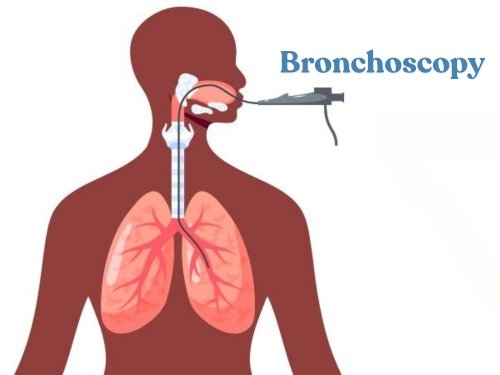
Bronchoscopy uses a thin instrument called a bronchoscope to examine the inside of the airways. A flexible bronchoscope can pass through the nose or mouth and into the breathing passages. A rigid bronchoscope is a larger, more structured instrument used in selected interventional procedures.
During the examination, the doctor can inspect the airway lining and, when necessary, collect samples for further testing. Depending on the clinical situation, bronchoscopy may also be used for certain therapeutic procedures. The choice between flexible and rigid bronchoscopy depends on factors such as the suspected condition, the location of an abnormality, the procedure required, and the patient’s overall health.
Why Is a Bronchoscopy Procedure Done?
A Bronchoscopy Procedure may be recommended when other investigations have not provided enough information or when direct examination of the airways is clinically useful.
Common reasons include:
- Persistent or unexplained cough
- Coughing up blood
- Abnormal findings on a chest X-ray or CT scan
- Suspected lung infection
- Evaluation of a suspicious lung or airway lesion
- Suspected lung cancer
- Unexplained airway obstruction
- Removal of an inhaled foreign body
- Collection of airway, fluid, or tissue samples
- Evaluation of selected inflammatory or interstitial lung conditions
The reason for a Bronchoscopy in Bhopal procedure is different for every patient. Some people need bronchoscopy mainly for diagnosis, while others may require an interventional procedure to address an airway problem. A pulmonologist will consider the expected benefit, possible risks, other available tests, and the patient’s overall condition before recommending the procedure.
What Can a Bronchoscopy Test Detect?
A Bronchoscopy Test allows the doctor to directly inspect parts of the airway that cannot be adequately assessed through a routine examination. It may help identify visible abnormalities, bleeding, airway narrowing, foreign bodies, or suspicious lesions.
Depending on the clinical situation, a Bronchoscopy Test may also allow the doctor to collect:
- Bronchial secretions
- Fluid samples
- Tissue samples
- Bronchoalveolar lavage samples
- Endobronchial biopsy specimens
- Transbronchial biopsy specimens
These samples can be sent for appropriate laboratory or pathological evaluation. Bronchoscopy does not diagnose every lung disease by itself. Its usefulness depends on the suspected condition and whether direct airway examination or sample collection can provide clinically relevant information.
When Is Bronchoscopy Recommended for Lung Disease?
Bronchoscopy for Lung Disease is considered in selected patients when airway examination or sample collection may help answer an important diagnostic or treatment question.
A doctor may consider it for:
Abnormal Chest Imaging
An unusual finding on an X-ray or CT scan may sometimes require further evaluation. Bronchoscopy can help examine the airways and collect samples when appropriate.
Suspected Lung Cancer
When cancer is suspected, bronchoscopy may help examine an airway lesion or obtain tissue for pathological testing. The exact procedure depends on the location and nature of the abnormality.
Difficult-to-Diagnose Infections
In selected patients, samples collected through bronchoscopy can be tested for infectious organisms when routine investigations have not provided a clear answer.
Airway Obstruction
Bronchoscopy may help identify narrowing, blockage, or another abnormality affecting the airway.
Foreign Body
An inhaled foreign object may sometimes require bronchoscopic removal, particularly when it is lodged in the airway.
Selected Interstitial Lung Conditions
Bronchoscopy and related sampling techniques may be useful in selected cases of interstitial lung disease when the treating team believes the information obtained will affect diagnosis or management.
What Happens During a Bronchoscopy Procedure?
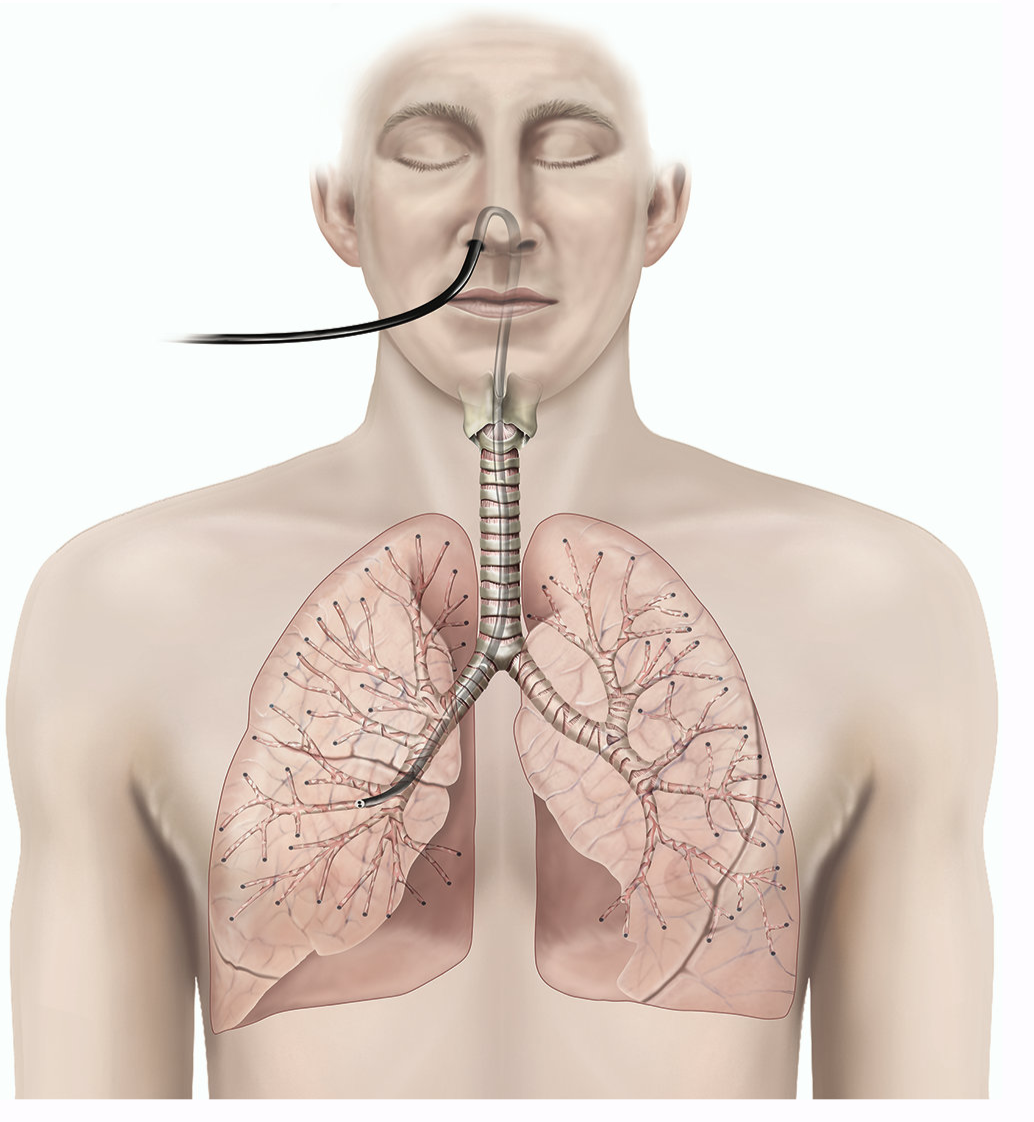
Before the procedure, the treating team reviews the patient’s medical history, symptoms, existing investigations, and medicines. The team also assesses whether the planned procedure is suitable and explains the relevant preparation and recovery process.
During Bronchoscopy in Bhopal, the general process may involve:
- Pre-procedure clinical assessment
- Preparation according to the treating team’s instructions
- Appropriate local anesthesia and/or sedation depending on the procedure
- Introduction of the bronchoscope through the appropriate route
- Examination of the airways
- Collection of fluid or tissue samples when required
- Completion of the procedure
- Recovery and observation
The exact process differs according to the type of bronchoscopy and whether additional interventions are required. For example, a straightforward diagnostic flexible bronchoscopy may be different from a procedure involving biopsy, EBUS, foreign-body removal, or airway intervention.
When Is Bronchoscopy Recommended for Lung Disease?
Bronchoscopy for Lung Disease is considered in selected patients when airway examination or sample collection may help answer an important diagnostic or treatment question.
A doctor may consider it for:
Abnormal Chest Imaging
An unusual finding on an X-ray or CT scan may sometimes require further evaluation. Bronchoscopy can help examine the airways and collect samples when appropriate.
Suspected Lung Cancer
When cancer is suspected, bronchoscopy may help examine an airway lesion or obtain tissue for pathological testing. The exact procedure depends on the location and nature of the abnormality.
Difficult-to-Diagnose Infections
In selected patients, samples collected through bronchoscopy can be tested for infectious organisms when routine investigations have not provided a clear answer.
Airway Obstruction
Bronchoscopy may help identify narrowing, blockage, or another abnormality affecting the airway.
Foreign Body
An inhaled foreign object may sometimes require bronchoscopic removal, particularly when it is lodged in the airway.
Selected Interstitial Lung Conditions
Bronchoscopy and related sampling techniques may be useful in selected cases of interstitial lung disease when the treating team believes the information obtained will affect diagnosis or management. Not every person with a lung condition needs bronchoscopy. The procedure is recommended only when the expected clinical value justifies it.
Types of Bronchoscopy
Flexible Bronchoscopy
Flexible bronchoscopy uses a thin, bendable bronchoscope that can navigate through the airways. It is commonly used to examine the bronchial passages, collect secretions, perform bronchoalveolar lavage, and obtain selected tissue samples. It can be useful when the doctor needs a closer look at the airways or wants to collect material for laboratory or pathological testing.
Rigid Bronchoscopy
Rigid bronchoscopy uses a more structured instrument and is used for selected interventional procedures. It may be considered when larger instruments are required or when certain airway interventions are planned. The choice of technique depends on the clinical problem and the procedure being considered.
EBUS Bronchoscopy
Endobronchial ultrasound, or EBUS, combines bronchoscopy with ultrasound imaging. It can help doctors evaluate lymph nodes and structures located close to the airways. EBUS-guided sampling may be used when tissue from a lymph node or lesion is required. Dr. Daksh Sharma has training and experience with convex-probe EBUS, radial-probe EBUS, and EBUS-guided cryo nodal biopsy.
How Long Does Bronchoscopy Take?
The duration of bronchoscopy varies. A simple diagnostic examination may take less time than a procedure involving biopsies, EBUS, foreign-body removal, bleeding control, or another intervention.
The length can depend on:
- Type of bronchoscopy
- Number and type of samples required
- Location of the abnormality
- Whether an interventional procedure is needed
- Patient-specific medical factors
A Bronchoscopy Specialist in Bhopal can explain the expected process and approximate duration after reviewing the reason for the procedure and the planned technique. The total time spent at the facility may be longer than the procedure itself because preparation and recovery monitoring are also part of the process.
Frequently Asked Questions
During Bronchoscopy in Bhopal, the treating team first assesses the patient's medical history and the reason for the procedure. Appropriate local anesthesia and/or sedation may be used depending on the procedure. The bronchoscope is then introduced into the airways for examination. If necessary, the doctor may collect fluid or tissue samples. Afterward, the patient is monitored during recovery.
A Bronchoscopy Test in Bhopal may be recommended for persistent unexplained cough, coughing up blood, abnormal chest imaging, suspected infection, suspected cancer, airway obstruction, or the need for tissue or fluid samples. It may also be used for selected interventional procedures. Not every patient with a respiratory condition needs bronchoscopy, so the decision depends on the clinical findings and expected benefit.
Bronchoscopy in Bhopal is performed using appropriate anesthesia and/or sedation depending on the procedure and the patient's clinical needs. Some people may experience coughing, throat irritation, mild discomfort, or temporary hoarseness. The experience varies between patients and procedures. A Bronchoscopy Specialist in Bhopal can explain what to expect based on the type of bronchoscopy being considered.
The duration of Bronchoscopy in Bhopal varies according to the type of procedure, the number of samples required, and whether an intervention is being performed. A simple examination may differ considerably from bronchoscopy involving EBUS, biopsy, foreign-body removal, or airway treatment. Preparation and recovery also take additional time, so the total visit may be longer than the procedure itself.
Bronchoscopy in Bhopal is performed when the expected clinical benefit justifies the procedure, but it is not completely free of risk. Possible effects include sore throat, coughing, minor bleeding after biopsy, infection, and, with certain procedures, pneumothorax. Risk depends on the patient's health and the specific technique used. The treating team should discuss relevant risks before the procedure.
A Bronchoscopy Test in Bhopal can help examine abnormalities inside the airways and may identify bleeding, airway narrowing, obstruction, foreign bodies, or suspicious lesions. It can also allow collection of samples for infection testing or pathology. Bronchoscopy does not diagnose every lung disease by itself. Its usefulness depends on the suspected condition and whether direct airway examination or sampling can provide helpful information.
Yes, Bronchoscopy in Bhopal can help evaluate some suspected lung cancers, particularly when an abnormality is accessible through the airways. During the procedure, the doctor may obtain tissue or other samples for pathological examination. In selected cases, EBUS can also assist with sampling lymph nodes near the airways. The exact approach depends on the location and characteristics of the suspected lesion.
After Bronchoscopy in Bhopal, patients are monitored during recovery. Temporary throat numbness, irritation, coughing, or hoarseness may occur. If samples were collected, laboratory or pathology results may take additional time. A Bronchoscopy Doctor in Bhopal will provide procedure-specific instructions about recovery, eating and drinking, follow-up, and when results will be reviewed.
Bronchoscopy in Bhopal may be considered when there is persistent unexplained respiratory illness, abnormal chest imaging, a difficult-to-diagnose infection, suspected cancer, airway obstruction, or a need for tissue or fluid sampling. It may also have a role in selected interstitial lung disease cases. A Bronchoscopy Specialist in Bhopal first determines whether bronchoscopy is appropriate because not every lung condition requires the procedure.
A pulmonologist or interventional pulmonologist with appropriate training can perform bronchoscopy. Dr. Daksh Sharma has MD in Pulmonary Medicine, DM in Pulmonary Medicine & Critical Care, and FCCS, along with documented experience in flexible and rigid bronchoscopy, EBUS, biopsies, BAL, and other interventional pulmonary procedures. Patients considering Bronchoscopy in Bhopal should discuss the planned technique, purpose, and relevant risks with the treating specialist.